
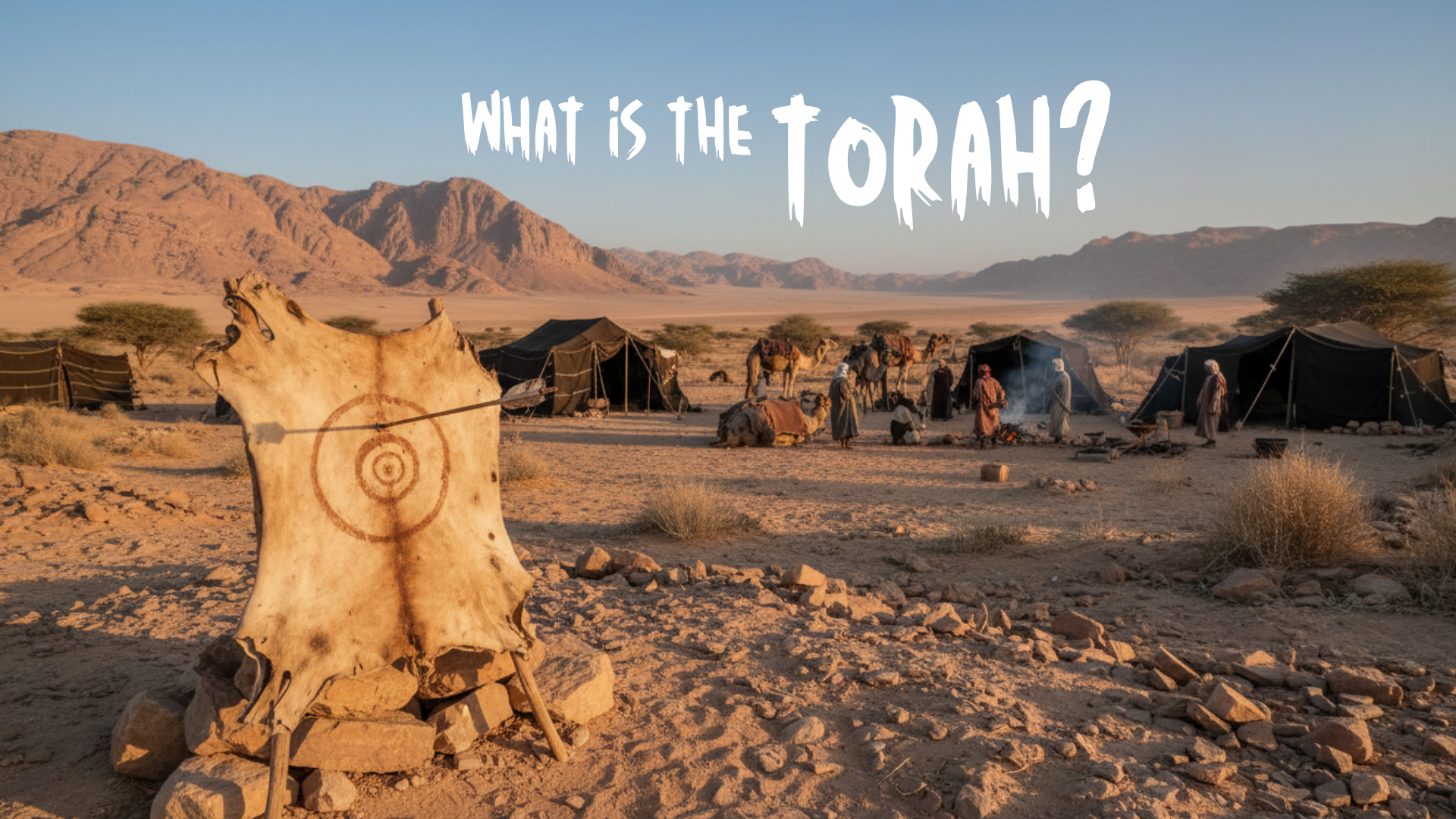
What is the Torah?
When Western readers encounter the word Torah, they typically translate it as “the Law.” And that’s not entirely inaccurate. The Torah does contain laws. Quite a few of them, in fact. But if “law” is the first word that comes to mind, something essential gets lost.
What is the Torah, really? Not as a theological abstraction, but as a living document — one that Jewish sages, Christian teachers, and contemplatives across centuries have returned to again and again as a map for the human soul?
That’s what we’re exploring here. As a fellow traveler through the world’s wisdom traditions, I’ve found the Torah to be one of the most richly layered and misunderstood texts in human history. The moment you understand what it’s actually pointing toward, a whole world opens up.
Let’s dig in.
Watch the Video Here
Torah Means Teaching — Not Law
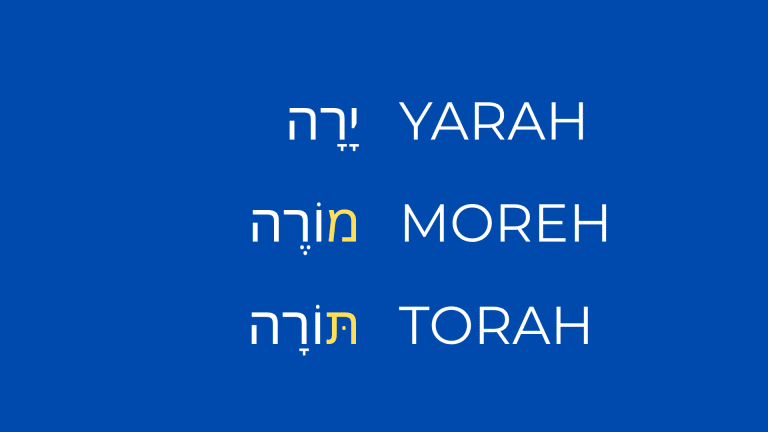
The Hebrew word Torah comes from the verb yarah, which means to shoot, throw, or aim — like an archer releasing an arrow toward a target.
Add the prefix mem to the beginning of yarah, and you get moreh: “archer,” “thrower,” or most commonly — “teacher.” The connection is poetic and precise. A teacher, like an archer, aims at a target and releases something toward the student. It’s up to the student to catch it.
Change the prefix to a tav, and yarah becomes Torah — “the teaching,” or “what is taught.”
So when we ask what is the Torah, the most accurate translation isn’t “Law” — it’s “Instruction” or “Teaching.” This distinction matters enormously, because it shifts the entire frame. Law implies obligation, penalty, enforcement. Teaching implies guidance, growth, and relationship.
The Torah is God’s instruction to humanity. Not a rulebook handed down from an irritable judge, but a teaching aimed — like an arrow — at something worth hitting.
The Five Books
In its most precise sense, the Torah refers to the first five books of the Hebrew Bible, also called the Pentateuch:
- Genesis — creation, the origins of humanity, the stories of the patriarchs
- Exodus — slavery in Egypt, Moses, the plagues, and the great liberation
- Leviticus — priestly rites, sacred calendar, ethical instructions
- Numbers — the forty years of desert wandering
- Deuteronomy — Moses’ final speeches and the renewal of the covenant
These books contain law, yes. But they also contain sweeping narrative: the garden of Eden, Noah’s flood, Abraham’s covenant with God, the brilliant Joseph sold into slavery by his brothers, Moses and the burning bush, the parting of the Red Sea, the thundering voice of God at Sinai.
These stories aren’t law. They’re something else — ancestral memory, wisdom literature, origin narrative, and spiritual instruction all woven together into a single sustained teaching.
The Archer, the Arrow, and the Target: Understanding Sin and Righteousness
Now that we know what Torah means, we can understand two other Hebrew concepts that are almost always mistranslated in popular culture: righteousness and sin.

Righteousness Means Straight
In Hebrew, the word for righteous carries the sense of “straight” — like an arrow that flies true, neither veering to the right nor to the left. The image is of perfect aim. An arrow released cleanly that travels directly to its mark is, in this metaphor, righteous.
This gives us a concrete picture of what it means to live righteously: it means staying on the path the teaching has laid out for you. Not straying. Not drifting. Flying true.
The Torah itself makes this explicit:
“And it shall be our righteousness, if we observe to do all these commandments before the Lord our God, as he has commanded us.” — Deuteronomy 6:25
Sin Means Missing the Mark
Sin, on the other hand, comes from the Hebrew word chata — which means, quite literally, to miss the mark. To miss the target.
Think about that for a moment. In most popular religious imagination, sin is about moral failure, guilt, divine punishment. And it can carry all of those things. But at its etymological root, sin is simply an archery term. It’s what happens when the arrow goes wide.
The archer hasn’t failed as a person. The archer has missed — and can aim again.
This is a much more compassionate framework than most of us were handed. It doesn’t mean consequences don’t exist. But it repositions the whole conversation: the Torah isn’t a threat, it’s a target. A direction. And missing isn’t the end — it’s an invitation to draw the bowstring again.
“Whoever commits sin transgresses the law; for sin is the transgression of the law.” — 1 John 3:4
Both Jewish and Christian traditions use the same underlying logic: righteousness is hitting the mark the Torah has set. Sin is missing it.
What Is the Torah Aiming At? The Question of the Most Important Stuff
This brings us to the deepest question: if the Torah is God’s teaching, what is it teaching toward? What’s the target?
Scholars and sages have wrestled with this question for millennia. The Torah contains 613 commandments in traditional Jewish counting. Are they all equally important? Do some matter more than others? Is there a single principle that holds the whole thing together?
Rabbi Shammai and Rabbi Hillel
There’s a famous story set in Jerusalem in the generation just before Jesus. Two great rabbis — Shammai and Hillel — led rival schools of interpretation, and their approaches couldn’t have been more different.
Rabbi Shammai was exacting, rigorous, and uncompromising. He believed the Torah demanded total seriousness and careful, thorough study. You didn’t reduce 613 commandments to a quick summary.
One day, a young man approached Shammai with a cheeky challenge: “Can you teach me the entire Torah while I stand on one foot?”
According to the legend, Shammai — who happened to be holding a ruler — beat the young man with it and sent him away. The Torah isn’t a cliché, his response implied. Men devote their whole lives to this.
But the young man wasn’t finished. He went to Rabbi Hillel with the same question.
Hillel — known for his grace, his humility, and his remarkable gift for seeing the big picture without losing the details — didn’t chase him away. He answered:
“What you do not want others to do to you, don’t do to others. This is the whole Torah. The rest is commentary.” — Rabbi Hillel
The rest is commentary. Not the rest is unimportant — commentary is essential, and Hillel would have been the first to say so. But the whole edifice, all 613 commandments, all the narrative and law and ritual and covenant — it all hangs on this single golden thread: do not do to others what you would not want done to yourself.
The Two Great Commandments
How did Hillel arrive at this summary? By distilling a principle the ancient sages had already identified across centuries of careful study.
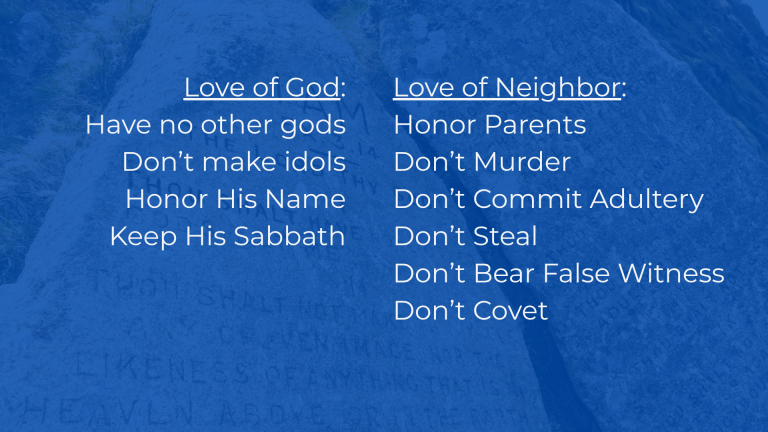
They noticed that the Torah — and especially the Ten Commandments at its heart — could be organized into two categories. The first involves love of God. The second involves love of neighbor. And those two categories, taken together, form a kind of unified field theory of the Torah’s ethical vision.
Love of God encompasses:
- Having no other gods — placing ultimate allegiance where it belongs
- Refusing idols — not substituting lesser things for ultimate meaning
- Not taking God’s name in vain — honoring the sacred with our words
- Keeping the Sabbath — trusting enough in God to stop and rest
Love of neighbor encompasses:
- Honoring parents — honoring the generation that gave us life
- Not murdering — refusing to extinguish human life
- Not committing adultery — honoring the covenant bonds of others
- Not stealing — respecting others’ security and provision
- Not bearing false witness — speaking truth about those around us
- Not coveting — releasing the grip of comparison and resentment
The same framework appears centuries later in the teachings of Jesus. When asked which commandment was the greatest, his answer echoed the sages precisely:
“You shall love the Lord your God with all your heart, and with all your soul, and with all your mind. This is the first and great commandment. And the second is like unto it: You shall love your neighbor as yourself. On these two commandments hang all the Law and the Prophets.” — Matthew 22:37–39
On these two commandments hang all the Law and the Prophets. The same image Hillel used: the rest is commentary. The whole structure hangs on love.
Love as a Verb: Why the Hebrew Worldview Matters
There’s something important to understand about how love functions in this framework — something that gets lost in translation.
Hebrew is a verb-based language. Its concepts are rooted in action, not abstraction. When the Torah talks about love — ahavah — it’s not primarily describing a feeling. It’s describing something you do.
This is one of the most significant gifts the Jewish wisdom tradition offers to modern seekers: the insistence that love is not a sentiment, it’s a practice.
The Torah doesn’t say “feel warmly toward your neighbor.” It says: don’t steal from them. Don’t lie about them. Don’t sleep with their spouse. Don’t covet what they have. Don’t kill them, even in your heart.
These are all concrete, embodied, behavioral expressions of love. They’re love in action. Which means the Torah, at its root, is a manual for loving well. This was the gift that God gave us on that ancient Shavuot.
This connects the Jewish wisdom tradition to virtually every other major wisdom tradition on the planet. The Buddhist precepts against harming, lying, and stealing. The Taoist principle of wu wei — acting in harmony rather than at the expense of others. The Stoic emphasis on right action and virtue over emotion. The Sufi teaching on service as the highest form of devotion. The Christian ethic of love-as-the-fulfillment-of-the-law.
They’re all pointing at the same target. And the Torah articulates that target with remarkable clarity.
Why This Matters: The Torah as a Living Document
One reason I’ve spent so much time with the Torah as part of this wider exploration of wisdom traditions is that it’s been so consistently misused.
Historically, Torah law has been wielded as a weapon — to enforce conformity, to marginalize outsiders, to justify violence, to oppress the vulnerable. This is not a small or incidental problem. It’s happened across centuries, across cultures, in both Jewish and Christian contexts.
But here’s what the sages themselves would say: that’s not the Torah. That’s the Torah being twisted.
When the ancient instruction is filtered through love — when every reading asks the question “does this help us love God and love our neighbor?” — it becomes something else entirely. It becomes, as the tradition itself says, a tree of life to those who hold it fast.
Understanding what is the Torah — really understanding it — means encountering a teaching that is, at its deepest level, an invitation into love. Love as practice. Love as discipline. Love as the organizing principle of an entire way of life.
That’s a teaching worth taking seriously, no matter which tradition you come from — or none at all.
What to Take With You: 3 Practices From Torah’s Wisdom
Ancient wisdom isn’t meant to stay in the past. Here are three practical ways to let the Torah’s deepest teachings land in your daily life:
1. Notice What You’re Aiming At
The archery metaphor gives us a useful daily practice: ask yourself, what am I aiming at right now? In your words, your decisions, your relationships — what target are you pointing toward? This is a question Torah-consciousness would recognize as central. Keep checking your aim.
2. Reframe “Missing the Mark”
When you fall short of your own values — when you snap at someone you love, or act out of fear instead of generosity — try the Hebrew framework. You missed the mark. That’s not the end of the story. You can draw the bow again. This reframe doesn’t remove accountability. It removes shame’s stranglehold on growth.
3. Test Every Teaching by Love
Rabbi Hillel, Jesus, and centuries of sages agreed: if a reading of sacred instruction doesn’t serve love — love of the sacred, love of the neighbor, love of the self — it’s probably not being read correctly. Use this as a filter in your own life. When someone wields a spiritual text as a weapon, ask: does this serve love? If not, you should set it down.
A Fellow Traveler’s Note
I’m no expert, but I’m someone who has spent years sitting with texts from many traditions, looking for the places where they all seem to be pointing at the same thing.
The Torah is one of those texts that rewards long, patient attention. The more I’ve sat with it, the more I’ve found it illuminating texts from other traditions I love — Buddhist teachings on right action, Stoic meditations on virtue, Sufi poetry about divine love. The traditions are not identical. But they rhyme.
If you’ve been told that the Torah is just a list of rules from an ancient culture — or worse, that it’s a tool for judgment and exclusion — I hope this has offered a different door in. Because behind that door is something genuinely beautiful: a teaching about what love looks like when it gets off the page and into your life.
That, I think, is worth exploring.
FAQs:
Q: What does the word Torah actually mean?
Torah comes from the Hebrew root yarah, meaning to shoot or aim like an archer. It’s most accurately translated as “Teaching” or “Instruction” — not “Law,” as it’s commonly rendered in English. The distinction matters: law implies obligation and penalty, while teaching implies guidance, growth, and relationship.
Q: What are the five books of the Torah?
The Torah consists of the first five books of the Hebrew Bible: Genesis, Exodus, Leviticus, Numbers, and Deuteronomy. Together they contain creation narratives, the stories of the patriarchs, the Exodus from Egypt, the giving of the Ten Commandments at Sinai, and the forty years of wilderness wandering.
Q: What does sin mean in Hebrew?
The Hebrew word for sin is chata, which literally means “to miss the mark” — an archery term. At its root, sin isn’t primarily about moral failure or divine punishment; it’s about missing the target the Torah has set. This reframe doesn’t remove accountability, but it does reposition sin as something correctable rather than something final.
Q: What is the most important commandment in the Torah?
Both Rabbi Hillel and Jesus pointed to the same answer: love. Love of God with your whole heart, soul, and mind — and love of your neighbor as yourself. According to Jesus, “On these two commandments hang all the Law and the Prophets.” The sages saw all 613 commandments as expressions of these two root principles.
Q: What did Rabbi Hillel mean when he said “the rest is commentary”?
When asked to summarize the entire Torah while standing on one foot, Rabbi Hillel replied: “What you do not want others to do to you, don’t do to others. This is the whole Torah. The rest is commentary.” He wasn’t dismissing the rest of the Torah — he was identifying the unifying principle that all the other instructions support and elaborate on.
Q: How is the Torah different from the Bible?
The Torah refers specifically to the first five books of the Hebrew Bible (Genesis through Deuteronomy). The broader Hebrew Bible — called the Tanakh in Jewish tradition — also includes the Prophets and the Writings. Christians refer to the Hebrew Bible as the Old Testament, and add the New Testament to complete their canon. The Torah is the foundation all of these build upon.
Q: Is the Torah only for Jewish people?
The Torah is the foundational sacred text of Judaism, and its commandments are addressed specifically to the Jewish people in their covenant with God. However, the wisdom it contains — particularly its ethical teachings about love, justice, and right relationship — has been studied, cited, and built upon by Christian, Islamic, and secular philosophical traditions for centuries. Many of its deepest insights speak to universal human experience.
Q: What does it mean to be righteous according to the Torah?
In Hebrew, the word for righteous carries the sense of “straight” — like an arrow that flies true to its target without veering. To live righteously, in the Torah’s framework, is to follow the instruction faithfully, staying on the path it lays out. It’s less about moral perfection than about consistent, intentional aim.