Intro
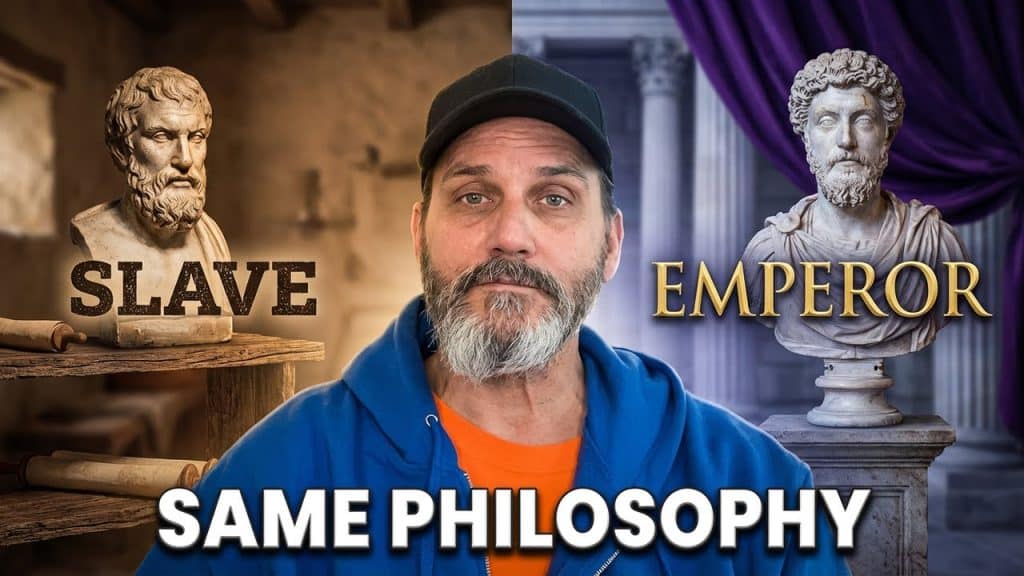
What is Stoicism? Two thousand years ago, a slave named Epictetus sat in chains and taught one of the most powerful mental frameworks in Western history. Decades later, the most powerful man in the world — the Roman Emperor Marcus Aurelius — used that same framework to govern an empire, face relentless war, and bury multiple children. Both men suffered greatly, but neither was destroyed by what happened to him. Rather, they were shaped by it.
We’ve all heard the descriptor: “He’s so stoic.” By that, we mean, he doesn’t express his emotions. He has the emotional IQ of a marble statue. But that’s not what Stoicism actually is. In reality, it’s a profound philosophy of the will — a training program for the inner life. And it is experiencing one of the most remarkable intellectual revivals of our time.
From Silicon Valley founders to Navy SEALs, from trauma therapists to professional athletes, Stoic practices have re-entered the mainstream. Books like Ryan Holiday’s The Obstacle Is the Way have sold millions of copies. Daily Stoic podcasts and newsletters reach hundreds of thousands of subscribers. Something in this ancient tradition is meeting a real and urgent need in modern people.
This post is an introduction to what Stoicism actually is — its history, its core teachings, and how it compares to other wisdom traditions, particularly Buddhism. By the end, you will have three practical exercises you can bring into your life this week.
Watch the Video Here
A Brief History: The Stoics Who Still Speak to Us
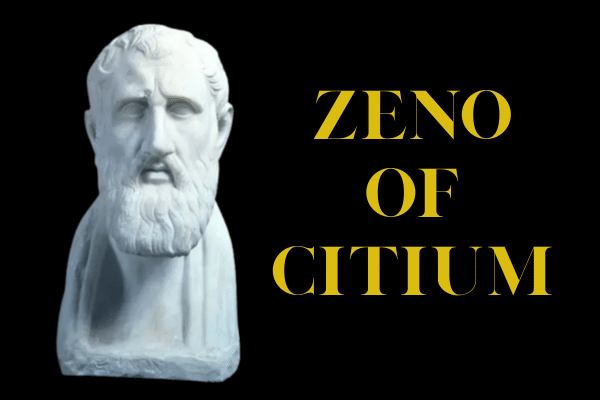
Zeno of Citium (c. 300 BCE)
Stoicism was born in Athens around 300 BCE, in an unlikely place: a painted porch. The Greek word for porch is stoa — which is where the philosophy gets its name. A merchant named Zeno of Citium had shipwrecked, lost his fortune, wandered into a bookshop in Athens, and discovered Socratic philosophy. He was so captivated that he asked the bookseller where he could find men like Socrates. The bookseller pointed at the philosopher Crates walking by. Zeno followed him, and a school was born.
But Zeno and the original Greek Stoics are largely unknown today. The three figures who carried Stoicism into history — and who most readers encounter first — were Roman, separated by both class and century, and yet remarkably unified in their core convictions.
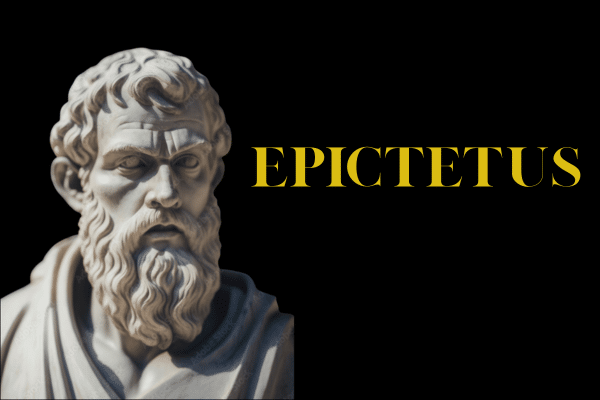
Epictetus (c. 50–135 CE)
Epictetus was born a slave in what is now Turkey. His owner, a freedman in Nero’s court, gave him some education — apparently believing that a philosophically trained slave might be more useful. Epictetus studied Stoicism and was eventually freed. He went on to teach philosophy in Rome and later in Nicopolis, Greece, where students came from across the Empire to learn from him. He wrote nothing himself; his student Arrian compiled his teachings into the Discourses and the shorter Enchiridion (Handbook). His core teaching is deceptively simple: there is what is up to us, and there is what is not up to us. Everything depends on knowing the difference. We call this the Dichotomy of Control.
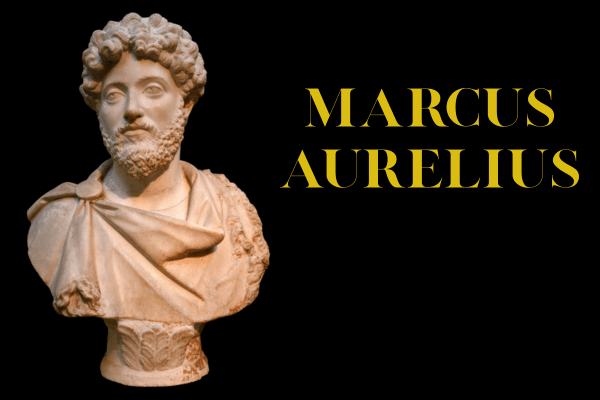
Marcus Aurelius (121–180 CE)
Marcus Aurelius became emperor at 39 and spent most of his reign on the battlefield, fighting the Marcomanni on the empire’s northern frontier. While doing so, he kept a private journal — never intended for publication — in which he reminded himself daily of Stoic principles, struggled with anger, mourned his dead children, and tried to be a better man. That journal, the Meditations, is one of the most intimate and enduring documents in all of philosophical literature. It reads not like a treatise but like a man talking to himself at the end of a hard day.
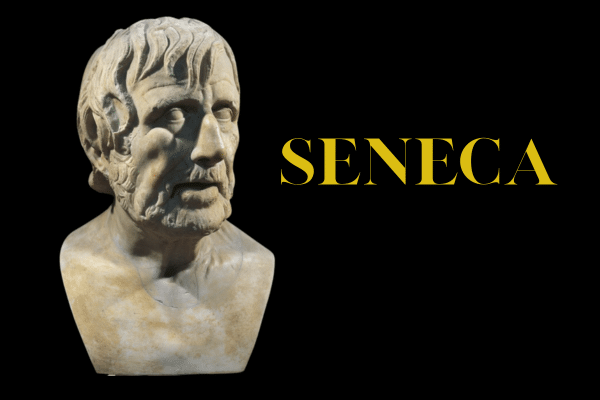
Seneca (c. 4 BCE–65 CE)
Seneca was a playwright, essayist, and advisor to the emperor Nero. His life was full of contradiction — he wrote eloquently about the dangers of wealth while being extraordinarily wealthy; he counseled temperance while navigating a court defined by excess. He was ultimately ordered to commit suicide by Nero, which he did with documented calm. His Letters to Lucilius remain among the most readable philosophical texts ever written — conversational, urgent, personal, and wise. Seneca understood that philosophy must be lived or it is nothing.
The 4 Stoic Virtues — And What They Look Like in a Modern Life
At the heart of Stoic ethics are four virtues — what the Greeks called the cardinal virtues. These are not rules to follow but capacities to develop. The Stoics believed that virtue was both the only true good and the foundation of a flourishing life (eudaimonia). Everything else — wealth, reputation, health, pleasure — was classified as a preferred indifferent: good to have but not essential to the good life.
1. Wisdom (Sophia)
Wisdom is the ability to see things clearly and respond rightly — to distinguish what is genuinely good from what merely appears to be. In practice, this means cultivating the kind of honest self-examination that Socrates demanded: not accepting your first reaction as the truth, not confusing your preferences with your values, and not letting fear masquerade as prudence. Today, this looks like pausing before reacting, asking yourself what you actually know versus what you are assuming, and building the habit of revisiting your conclusions.
2. Justice (Dikaiosyne)
Justice, for the Stoics, was not primarily about courts and laws. It was about right relationship — with your community, your colleagues, your family, and strangers. The Stoics believed in cosmopolitanism: the idea that all human beings share reason, and therefore all human beings deserve moral consideration. This is striking for an ancient tradition. Epictetus — a former slave — taught that social hierarchy means nothing in the realm of virtue. In modern life, this virtue calls us toward genuine fairness, integrity in our dealings, and the recognition that our actions always ripple outward.
3. Courage (Andreia)
Courage in the Stoic sense is not the absence of fear but the willingness to act rightly in the presence of it. The Stoics were particularly interested in the courage required not in battle but in ordinary life: the courage to speak the truth when silence would be more comfortable, to maintain your principles when social pressure runs the other way, to face grief, illness, or uncertainty without being destroyed. This is the virtue that makes resilience possible — not toughness, but steadiness.
4. Temperance (Sophrosyne)
Temperance is the capacity for self-regulation — knowing when enough is enough, governing your appetites, and living in proportion. The Stoics were not ascetics (Epictetus noted that Socrates ate simply not to be pious but to be healthy), but they were deeply suspicious of excess. Modern applications are obvious: our relationship to food, screens, consumption, and stimulation all benefit from this kind of governance. Temperance is not about deprivation — it is about freedom from the tyranny of appetite.
Pick one of the four virtues and spend a single week paying attention to where it shows up — or fails to show up — in your daily decisions.
Wisdom: notice the moments when your first reaction is not your best one.
Justice: notice where you treat people unequally.
Courage: notice the moments you went along rather than spoke up.
Temperance: notice where appetite or habit is running your choices. You do not need to fix anything yet. Observation is the beginning of philosophy.
The Dichotomy of Control: The Practice at the Heart of Stoicism
If there is one concept that defines Stoicism more than any other, it is the Dichotomy of Control — or as Epictetus called it, the distinction between what is eph’ hēmin (up to us) and what is ouk eph’ hēmin (not up to us).
Epictetus opens the Enchiridion with it directly: ‘Some things are in our control, and others are not. In our control are opinion, motivation, desire, aversion, and, in a word, whatever is of our own doing. Not in our control are our body, our property, reputation, office, and, in a word, whatever is not of our own doing.’
This is not a counsel of passivity. It is a radical reorientation of attention. The Stoics were not saying to not act. They were instructing to put your energy into what you can actually govern, and meet the rest with equanimity.
In practical terms, this means recognizing that your opinion, your effort, your response, your values, and your attention are always, in some sense, yours — even in the most constrained circumstances. Epictetus taught from his experience as a slave. Viktor Frankl wrote about choosing one’s attitude in a Nazi concentration camp. The Stoic teaching is not comfortable, but it is also not empty: even when external control is stripped away entirely, something remains that belongs to us.
This is what makes Stoicism so relevant to modern anxiety. Much of our suffering comes not from what is actually happening but from our judgment about it, our catastrophizing, our insistence that things be other than they are. The Stoic practice is to return, again and again, to the question: Is this in my control? And if not — what is the most rational, virtuous response available to me?
When you find yourself anxious, frustrated, or overwhelmed, try the Stoic triage: take a sheet of paper and draw a line down the middle. On the left, write everything about the situation that is in your control. On the right, write everything that is not. Then direct your energy exclusively toward the left column.
Stoicism vs. Buddhism: Surprising Common Ground
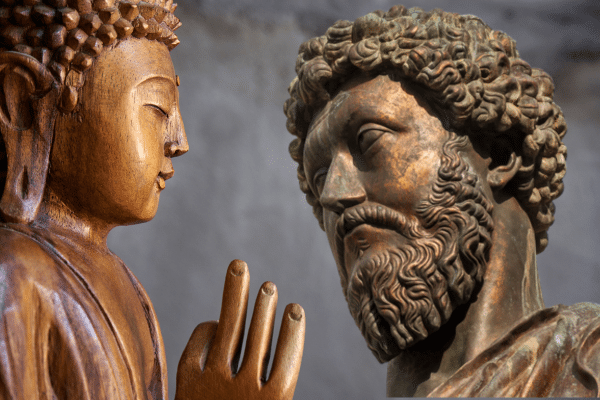
One of the most striking features of ancient wisdom traditions is how often they arrived at similar destinations from radically different starting points. Stoicism and Buddhism are perhaps the most compelling example.
Both traditions emerged in the 5th and 4th centuries BCE — roughly contemporaneously, with no evidence of direct contact. Both were responding to the same fundamental human predicament: the suffering that arises from our relationship to impermanent things and events. And both arrived at practices with remarkable structural similarities.
Theme |
Stoicism |
Buddhism |
|---|---|---|
|
Core Problem |
Suffering from false judgement |
Suffering from craving/aversion |
|
Core Practice |
Examine and align your will |
Observe and release attachment |
|
The Self |
A rational soul guided by nature |
No permanent Self (anatta) |
|
Emotions |
Transform through reason |
Transform through mindfulness |
|
Goal |
Eudaimonia – the flourishing life |
Nirvana – liberation from suffering |
|
Daily Practice |
Journaling, reflection, Momento Mori |
Meditation, breath, loving-kindness |
The differences are real and worth honoring. Stoicism is rationalist in its orientation: reason is the path. Buddhism is more phenomenological — the emphasis is on direct observation and the seeing-through of conceptual overlays, including the self. The Stoic sage is a figure of active rational virtue; the Buddhist ideal of the bodhisattva is defined by compassionate presence and wisdom about the nature of mind.
And yet: both traditions insist that suffering arises from our RELATIONSHIP to experience, not from experience itself. Both teach that equanimity is possible — not as emotional flatness but as a groundedness that can hold difficulty without being swept away by it. Both develop this equanimity through consistent practice. Both see this inner work as the precondition for genuine engagement with the world.
For the modern seeker who does not want to choose between traditions, this convergence is itself a teaching. As I explore on this site, the great traditions are not competing systems demanding exclusive allegiance — they are different maps pointing toward the same territory. You will find the view of that territory by using all of them.
3 Stoic Exercises You Can Try This Week
Stoicism was never meant to be an intellectual exercise. The Stoics were insistent that philosophy is not a subject to be studied but a practice to be lived. Here are three exercises drawn directly from the ancient texts — adapted for the rhythms of modern life.

Exercise 1: The Morning Premeditatio Malorum
Before your day begins — before you check your phone — take five minutes to sit with this question: What difficulties might I face today? The Stoics called this the premeditatio malorum (premeditation of evils). Not to catastrophize, but to prepare. Marcus Aurelius opened each morning by reminding himself that he would meet difficult people, face frustrations, encounter ingratitude. By meeting these possibilities in imagination first, he could respond from his values rather than from surprise.
Write down one or two specific things that might go wrong today, and then write: If this happens, here is how I will respond with virtue and equanimity. The act of writing it transforms a vague dread into a navigable scenario.

Exercise 2: The Evening Examination
Seneca describes a practice of examining each day at its close. He asked himself three questions: What bad habit did I put aside today? Against what vice have I made progress? Where can I improve? This is not self-flagellation — it is the kind of honest accounting that actually produces growth. Modern psychological research on self-compassionate self-reflection confirms what Seneca already knew: examining your behavior without shame is far more effective than either ignoring it or punishing yourself for it.
Before sleep, take three minutes with a journal. Write one honest observation about how you showed up today — and one specific intention for tomorrow.

Exercise 3: Negative Visualization
The Stoics practiced a deliberate meditation on impermanence — on the possibility of losing what they valued. The philosopher Epictetus suggested imagining that when your child goes out to play, you remind yourself that they are mortal. Not to become morbid, but to be genuinely present with what you have, rather than taking it for granted.
If you’re a parent, you’ve probably experienced this fear already. Epictetus didn’t suggest this to frighten us; he wanted us to use the practice to appreciate what we already have. So often we desire what we don’t have, but rarely appreciate what we do.
This week, choose one relationship, possession, or circumstance that you tend to take for granted. Spend two minutes genuinely imagining life without it — not to become anxious, but to recognize its actual value. This is not pessimism. It is the antidote to the hedonic adaptation that robs us of gratitude for what is already ours.
You do not need to adopt all three practices at once. The Stoics themselves were suspicious of sudden conversions and dramatic resolutions. Choose one exercise — the one that seems most immediately useful to your actual life — and practice it for two weeks before adding another. Consistency over intensity is the Stoic way.
Ancient Roots, Modern Urgency
Stoicism is not a relic. It is a living tradition — one that has been tested in slavery, exile, war, grief, political corruption, and the ordinary weight of days that do not go as planned. The fact that it has returned so powerfully in our own moment is not an accident. We are anxious, distracted, and uncertain. We live in a world that generates more information and less wisdom than any civilization in history. Ancient traditions like Stoicism exist precisely to address this: not by giving us answers from outside, but by training us to find our ground from within.
Marcus Aurelius was not serene because nothing bad happened to him. He was serene — or was always trying to be — because he had a practice. That practice is available to you.
If you are new to the world of ancient wisdom, I would encourage you to explore the broader landscape. This post is part of a series on how the great traditions speak to modern life. A good next step is Ancient Wisdom Traditions: A Beginner’s 7-Step Guide, which maps the terrain across all six major traditions.
And if you have ever felt the particular weight of inner conflict — the war between who you are and who you want to be — The War Without and the War Within explores that territory through multiple ancient lenses.
FAQs:
Is Stoicism a religion?
No. Stoicism is a philosophy — a practical framework for living well. The ancient Stoics did believe in a rational principle pervading the universe (which they called the Logos), and some of their writings are compatible with religious faith, but Stoicism makes no theological demands. It has been practiced by atheists, Christians, agnostics, and people of every religious background. It is a way of training attention and will, not a belief system requiring doctrinal assent.
Is Stoicism the same as being emotionless?
No — and this is probably the most common misconception about the tradition. The Stoics distinguished between passions (pathe) — which are based on false judgments and tend to overwhelm us — and good emotions (eupatheiai), which are appropriate responses to reality. The Stoic goal is not the suppression of emotion but the transformation of it. Marcus Aurelius wept. Seneca wrote movingly about grief. The Stoics were not robots; they were people learning to be moved by what is actually worth being moved by.
How is Stoicism different from just ‘sucking it up’?
Dramatically. ‘Sucking it up’ is a kind of suppression — pushing difficulty down and hoping it stays there. Stoicism is a practice of active examination: you look at the difficulty clearly, assess what is within your control and what is not, respond with virtue, and release what cannot be governed. It is active, honest, and deeply engaged with what is happening — the opposite of denial.
Where should I start reading?
For most modern readers, the best entry points are Marcus Aurelius’s Meditations (Gregory Hays’s translation is widely considered the most readable) and Epictetus’s Enchiridion (also called the Handbook — short enough to read in an afternoon). Ryan Holiday’s The Daily Stoic is a popular accessible bridge for readers coming to Stoicism for the first time. Once you have those foundations, Seneca’s Letters to Lucilius will deepen the practice considerably.
Can Stoicism work alongside therapy or other spiritual practices?
Very well. Cognitive Behavioral Therapy (CBT) — one of the most evidence-supported forms of psychotherapy — draws explicitly from Stoic philosophy. The CBT principle that our emotional responses are shaped by our interpretations of events, not by the events themselves, is Stoic to its core. Stoicism also pairs naturally with meditation practices (particularly mindfulness-based approaches), with contemplative Christian prayer, and with Buddhist practice — all of which share a concern with the governance of the mind and the cultivation of genuine equanimity.