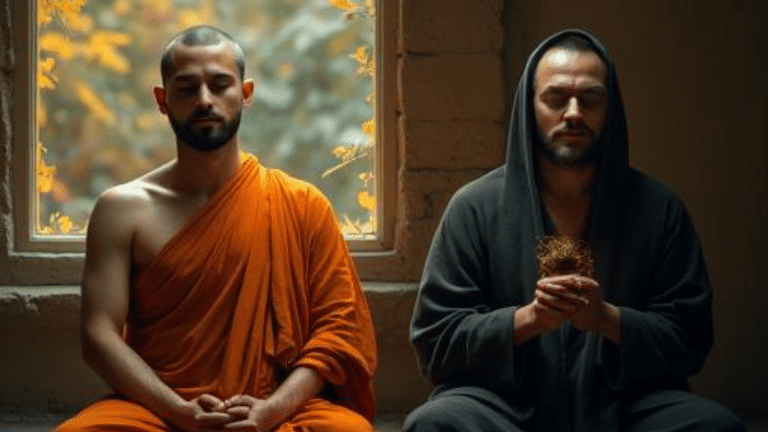

Introduction
What if the answers to your most pressing modern problems were written down thousands of years ago?
That sounds almost too good to be true. But here’s what I’ve discovered on my own journey: the ancient wisdom traditions of the world — from the forests of India to the schools of ancient Greece, from the mountains of China to the deserts of the Middle East — have been grappling with the same fundamental questions you and I face every single day.
How do I deal with suffering? How do I find purpose? How do I stay calm in chaos? How do I live with more meaning?
Ancient wisdom traditions aren’t dusty museum relics. They are living, breathing, practical roadmaps — tested not for years, but for millennia.
In this beginner’s guide, I’m going to walk you through seven of the world’s most powerful wisdom traditions, the core teachings they share, and — most importantly — how you can begin applying them to your life starting today. Not as a scholar. Not as a monk. Just as a curious human being who wants to live better.
I’m not a professional theologian or a professor. I’m a fellow traveler, doing my best to translate the most enduring insights humanity has ever produced into something real and usable. These traditions are our human inheritance. Let’s dig in.
Watch the Video Here

What Are Ancient Wisdom Traditions?
Before we explore the specific traditions, it helps to understand what we mean by “ancient wisdom traditions.”
At their core, wisdom traditions are systematic bodies of knowledge — spiritual, philosophical, or ethical — that have been refined and passed down across generations. They represent humanity’s deepest attempts to answer the biggest questions of existence.
What distinguishes a wisdom tradition from, say, a self-help book or a productivity hack?
Three things: depth, time-testing, and universality.
A wisdom tradition has been lived, questioned, refined, and validated over centuries — sometimes millennia. It wasn’t developed in a weekend retreat or a bestselling book launch. It was forged in the lived experience of countless human beings wrestling with the same universal challenges you face today.
The scholar Aldous Huxley called the common thread running through all these traditions the Perennial Philosophy — the idea that beneath the surface differences of language, culture, and ritual, the world’s great teachings point toward the same essential truths about consciousness, meaning, and human flourishing.
That convergence is exactly what makes studying ancient wisdom traditions so exciting — and so practically useful.
Why Ancient Wisdom Traditions Matter More Than Ever
We live in an age of information overload and spiritual hunger.
We have more data, more content, and more productivity tools than any generation in history. And yet anxiety, depression, disconnection, and existential emptiness have never been more widespread.
Ancient wisdom traditions offer something our modern world desperately lacks: depth.
They don’t just tell you what to do. They help you understand who you are — and what kind of life is actually worth living.
Here’s the other thing I’ve found on my own journey: you don’t have to choose between science and ancient wisdom, between modernity and tradition. The best thinkers in psychology, neuroscience, and philosophy increasingly agree that the insights embedded in these traditions are empirically sound and practically powerful.
Mindfulness, which has been validated by decades of clinical research, is ancient Buddhist meditation practice. The Stoic concept of focusing only on what you can control is foundational to modern cognitive-behavioral therapy (CBT). The contemplative traditions’ emphasis on community, stillness, and service maps directly onto what positive psychology identifies as the core ingredients of human flourishing.
Ancient wisdom traditions aren’t alternatives to modern life. They are the missing foundation beneath it.
7 Ancient Wisdom Traditions Every Seeker Should Know
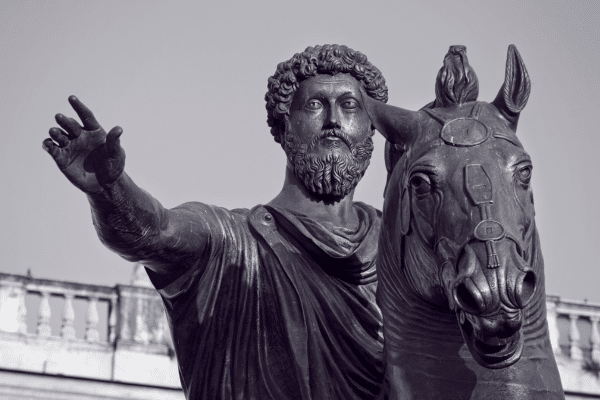
1. Stoicism — The Wisdom of What You Can Control
Origin: Ancient Greece and Rome (3rd century BCE onward)
Key Figures: Epictetus, Marcus Aurelius, Seneca
Core Text: Meditations (Marcus Aurelius), Enchiridion (Epictetus)
Stoicism is perhaps the most immediately practical of all the ancient wisdom traditions. Its central insight is deceptively simple: there are things within our control, and things outside our control. Wisdom begins with knowing the difference.
The Stoics called this the dichotomy of control. You cannot control external events — illness, loss, other people’s behavior, world events. But you can always control your response. Your judgments, your values, your effort, your character — these are yours, always.
This sounds straightforward. Living it is another matter entirely.
The Stoics developed a robust set of practices for training the mind — daily journaling (Marcus Aurelius wrote Meditations as a private journal), memento mori (meditating on death to appreciate life), premeditatio malorum (imagining worst-case scenarios to reduce anxiety), amor fati (embracing what life puts in our path), and voluntary discomfort (deliberately embracing hardship in small doses to build resilience).
Modern Application: Start a nightly journal with three questions: 1) What went well today? 2) What was outside my control that I wasted energy resisting? 3) What will I practice tomorrow?

2. Buddhism — The Wisdom of Impermanence and Compassion
Origin: Ancient India (5th–4th century BCE)
Key Figures: Siddhartha Gautama (the Buddha), Nagarjuna, Thich Nhat Hanh
Core Text: Dhammapada, Heart Sutra
Buddhism is built on what the Buddha called the Four Noble Truths: life involves suffering (dukkha); suffering arises from craving and attachment; it is possible to be free from suffering; and there is a path that leads to that freedom.
Notice what the Buddha was doing: he was diagnosing the human condition like a physician, then offering a treatment plan. This is deeply practical, not merely philosophical.
The Buddhist teachings on impermanence — the recognition that all phenomena are in constant flux — are especially relevant for modern life. Most of our suffering comes from clinging to things (pleasure, relationships, status, youth) as if they were permanent, when in fact they are always changing.
The Buddhist path — which includes ethical conduct, meditation practice, and the cultivation of wisdom — offers a complete framework for reducing suffering and increasing well-being. Meditation, at its heart, is simply training the mind to be present rather than lost in habitual thinking.
Modern Application: Begin a 5-minute daily sitting meditation. Simply focus on the sensation of your breath. When your mind wanders — and it will — gently return attention to the breath. No judgment. Just return.
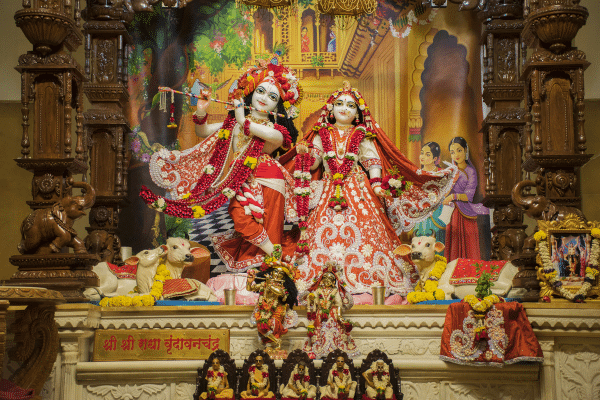
3. Vedanta — The Wisdom of the Self
Origin: Ancient India (1500 BCE onward, formalized around 8th century CE)
Key Figures: Adi Shankaracharya, Ramana Maharshi, Swami Vivekananda
Core Text: Upanishads, Bhagavad Gita
While Buddhism asks how do we reduce suffering, Vedanta asks a more fundamental question: who is the one that suffers?
Vedanta — particularly in its non-dual (Advaita) form — teaches that the deepest layer of who you are is pure consciousness itself. The sense of being a separate self, isolated and vulnerable, is a kind of misperception (avidya, or ignorance). Beneath the surface personality and the stream of thoughts is something unchanging, whole, and not subject to suffering.
The Bhagavad Gita — one of the most beloved texts in world literature — addresses this through the dialogue between the warrior Arjuna and the divine figure Krishna on a battlefield. It’s a powerful metaphor for the inner struggle every human being faces: how to act rightly in the world when everything feels confusing and overwhelming.
The Gita’s solution? Act from your deepest nature, without attachment to outcomes. Do what is right because it is right — not for personal gain or fear of loss. This is the concept of karma yoga, or selfless action.
Modern Application: When facing a difficult decision, ask: “Am I acting from fear, ego, and attachment to outcome — or from my deepest values, regardless of result?” This single question, applied consistently, is transformative.

4. Taoism — The Wisdom of Flow and Naturalness
Origin: Ancient China (6th–4th century BCE)
Key Figures: Laozi, Zhuangzi
Core Text: Tao Te Ching
Taoism centers on alignment with the Tao — a word that is nearly impossible to translate, but is often rendered as “the Way,” the natural order or principle underlying all of existence.
The Tao Te Ching, attributed to the sage Laozi, is one of the most widely translated books in human history — and one of the most compact. In just 81 short chapters, it offers a radical alternative to our culture’s obsession with force, control, and relentless striving.
The Taoist concept of wu wei — “non-action” or effortless action — is often misunderstood as passivity. In fact, it means acting in harmony with the natural flow of a situation rather than forcing outcomes through ego-driven effort. Think of water, which never forces anything, yet wears away rock over time.
Taoism also offers a profound teaching on paradox: the soft overcomes the hard; the empty is useful; in yielding, you prevail. These are not riddles — they are observations about how reality actually works, once you stop fighting it.
Modern Application: Identify one area of your life where you are exhausting yourself through force and resistance. Experiment for one week with wu wei — doing less, listening more, following the natural flow rather than imposing your will. See what changes.

5. Sufism — The Wisdom of the Heart
Origin: Islamic world (8th–9th century CE onward)
Key Figures: Rumi, Hafiz, Ibn Arabi, Al-Ghazali
Core Text: Masnavi (Rumi), Conference of the Birds (Attar)
Sufism is the mystical tradition within Islam, and it represents one of the most heart-centered streams in all the world’s wisdom traditions.
Where many traditions emphasize discipline, doctrine, or detachment, Sufism centers on love — specifically, the longing of the human soul for union with the Divine. The Sufi poets — Rumi especially — expressed this longing in some of the most luminous and widely-read poetry in human history.
Rumi’s famous opening lines of the Masnavi use the image of a reed flute — cut from its reed bed, crying for its origin — as a metaphor for the human soul separated from its source. The entire spiritual path, in this frame, is a journey of remembrance and return.
Sufism also developed rich contemplative practices: dhikr (the rhythmic repetition of sacred names or phrases), sama (sacred music and movement, associated with the “whirling dervishes”), and deep practices of self-examination (muhasaba) and presence with a spiritual guide.
What makes Sufism universally relevant — beyond its Islamic roots — is its insistence that love, beauty, and longing are spiritual data. Your capacity to be moved by music, poetry, a sunset, or a kindness is not a distraction from the spiritual path. It IS the path.
Modern Application: Read a poem by Rumi or Hafiz slowly, as a contemplative practice rather than an academic exercise. Let it land in your body, not just your mind. Ask: what in me resonates with this?
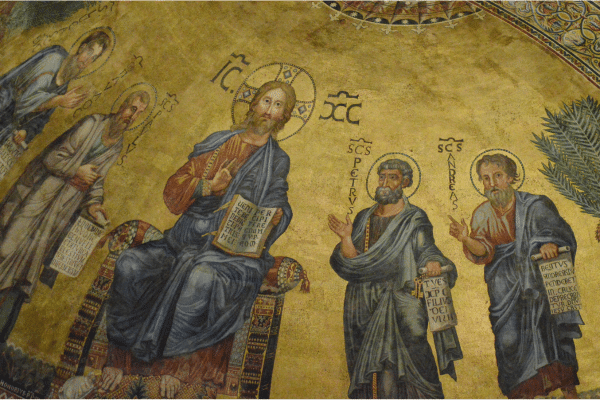
6. Contemplative Christianity — The Wisdom of Surrender and Presence
Origin: Early Christianity (1st–4th century CE), refined through medieval mysticism
Key Figures: Meister Eckhart, Thomas Merton, John of the Cross, Teresa of Ávila, The Desert Fathers
Core Text: The Cloud of Unknowing, Dark Night of the Soul, The Way of the Pilgrim
Christianity is often encountered only in its institutional or doctrinal forms. But within Christianity lies a rich contemplative tradition — a stream of practice and mystical insight that is as profound as any in the world.
The Desert Fathers and Mothers of 3rd–4th century Egypt, who retreated into the desert to pursue radical inner transformation, developed a psychology of the spiritual life that is startlingly sophisticated. Their collected sayings (Apophthegmata Patrum) offer hard-won wisdom on ego, temptation, silence, and compassion.
The medieval Christian mystics — Meister Eckhart, Julian of Norwich, John of the Cross — dove even deeper. They wrote with breathtaking directness about the dissolution of the ego-self in the encounter with the Divine: what Eckhart called Gelassenheit (letting go, yieldedness) and John of the Cross described as the Dark Night of the Soul — the stripping away of spiritual consolations to arrive at naked, mature faith.
Thomas Merton, the 20th-century Trappist monk, brought this contemplative stream into direct conversation with Buddhism, Taoism, and Sufism — recognizing profound kinship across traditions.
Modern Application: Practice Lectio Divina — the ancient Christian practice of slow, prayerful reading. Choose a short sacred text (it need not be specifically Christian). Read it once for content. Read it again slowly, pausing wherever a word or phrase catches your attention. Sit with that phrase in silence. Let it work on you.

7. Jewish Wisdom (including Kabbalah) — The Wisdom of Sacred Living
Origin: Ancient Near East (2000 BCE onward), with Kabbalah formalized in 12th–13th century CE
Key Figures: Moses Maimonides, the Baal Shem Tov, Martin Buber
Core Text: Torah, Talmud, Zohar
Jewish wisdom tradition is among the world’s oldest continuous streams of human reflection on ethics, meaning, and the sacred.
The Jewish approach to wisdom is distinctive in its grounding in this world rather than escape from it. Rather than seeking to transcend ordinary life, Jewish wisdom aims to sanctify it — to find the sacred dimension hidden within the most mundane moments of everyday existence.
There are deep truths to be mined in the yearly festivals: Passover, Unleavened Bread, Firstfruits, Shavuot, Rosh HaShanah, Yom Kippur and Sukkot. They all have divine lessons individually, and there’s an incredible meta-narrative weaved through them that’s appreciated not only by Judaism, but by Christianity and Islam as well.
This is expressed most practically in the concept of halacha (the “path” or religious law) — the idea that how you eat, work, rest, relate, and act are all opportunities for spiritual practice. The Sabbath (Shabbat), observed weekly as a day of complete rest and presence, is perhaps the most radical counter-cultural practice in the ancient world — and arguably just as counter-cultural today.
Kabbalah — the Jewish mystical tradition — adds another dimension: a cosmological framework (the Sefirot, the Tree of Life) for understanding the structure of consciousness and reality. Modern psychology, depth psychology especially, has drawn heavily on Kabbalistic insight.
Martin Buber’s concept of the I-Thou relationship — the idea that genuine human encounter is itself a form of meeting the Divine — remains one of the most powerful philosophical ideas of the 20th century.
Modern Application: Experiment with a weekly “micro-Sabbath” — even just a few hours of intentional rest, free from screens, productivity, and output. Simply be rather than do. Notice how this small practice changes the texture of your week.
What All These Ancient Wisdom Traditions Share
Here is what I find most remarkable after spending years exploring these traditions: beneath their surface differences — their languages, their rituals, their cultural forms — they converge on the same essential insights.
1. The ordinary ego-self is not the whole of who you are.
Every tradition points beyond the surface personality — the anxious, defending, striving self — to something deeper, more spacious, more resilient.
2. Present-moment awareness is foundational.
From Buddhist mindfulness to Taoist wu wei to contemplative Christian prayer, every tradition cultivates the capacity to be fully here, now.
3. Suffering arises from clinging and resistance.
The Stoics, the Buddha, the Taoists, the Sufis — all point to the same cause of unnecessary suffering: our insistence that reality be other than it is.
4. Transformation requires practice, not just belief.
Ancient wisdom traditions are not primarily about what you think. They are about what you do, consistently, over time. Practice is everything.
5. Compassion and love are not optional extras.
In every tradition, the cultivation of genuine care for others is not a byproduct of spiritual growth. It is one of its clearest signs.
How to Begin Your Own Exploration
The question isn’t which wisdom tradition is right. The question is which one — or which combination — speaks to your condition right now.
Here is a simple framework for beginning:
Step 1: Choose one tradition and go deep. Don’t try to sample everything at once. Pick the tradition that resonates most with you currently and spend at least 30 days with it.
Step 2: Read a primary text, not just summaries. Secondary sources are helpful, but there is no substitute for sitting with Meditations, the Tao Te Ching, the Bhagavad Gita, or Rumi’s poems directly.
Step 3: Find the practice, not just the philosophy. Every tradition has its contemplative practice — meditation, journaling, prayer, movement, sacred reading. Philosophy without practice is tourism.
Step 4: Find community. The wisdom traditions almost universally emphasize the importance of traveling with others. Whether that’s a study group, a sangha, a spiritual director, or even an online community of fellow seekers — don’t try to do this alone.
Step 5: Let it change your daily life. The test of ancient wisdom is not how much you know. It’s how you show up — in your work, your relationships, your habits, your inner life. That’s where the wisdom becomes real.
A Note From a Fellow Traveler
I want to be clear about something.
I’m not presenting myself here as an expert or an authority on these traditions. I’m a fellow seeker — someone who has found enormous practical value in these teachings and wants to share what I’ve found in a way that’s accessible and useful.
The great thing about ancient wisdom traditions is that they don’t require you to become a scholar, a monk, or a religious convert. They invite you to test their teachings in the laboratory of your own life.
Try it. Apply it. See what happens.
That’s been my approach — and it has genuinely changed the way I navigate the challenges of daily life. I believe it can do the same for you.
If you’re just getting started, check out my companion piece: A Beginner’s Guide to Meditation Across Traditions — a practical introduction to contemplative practice drawn from multiple wisdom streams.
Conclusion
Ancient wisdom traditions are not history lessons. They are invitations.
The Stoic emperor Marcus Aurelius sat down each morning and evening to wrestle with the same challenges you face: distraction, fear, loss, the temptation to act from ego rather than from values. The Desert Fathers wrestled with the same compulsive mental patterns that keep modern humans up at night. The Buddha’s diagnosis of suffering was as accurate in 5th-century BCE India as it is in the 21st century.
These teachings have outlasted empires, technologies, and civilizations because they are rooted in something that doesn’t change: the nature of the human mind, the human heart, and the human condition.
The door is open. The path is ancient, well-worn, and surprisingly applicable to wherever you are right now.
Start where you are. Use what you have. Take one step.
That’s all any tradition has ever asked.
Want to go deeper? Explore more on the channel: → Watch on YouTube
FAQs:
Do I need to be religious to benefit from ancient wisdom traditions?
Not at all. Many people engage with these traditions in a completely secular way, focusing on the psychological and philosophical insights rather than the theological claims. The practices — meditation, journaling, contemplative reading, ethical reflection — work regardless of your religious beliefs.
Can I practice wisdom from multiple traditions at the same time?
Yes, with one important caution: go deep before you go wide. Many seekers find it helpful to establish a stable foundation in one tradition before branching out. Mixing traditions superficially can lead to what some teachers call “spiritual bypassing” — collecting insights without embodying any of them.
Where should I start if I’m completely new to this?
For most modern readers, Stoicism or Buddhism offer the most accessible entry points, because both traditions have an extensive body of modern commentary, proven practical applications, and don’t require any particular religious commitment to begin.
How is this different from self-help?
The primary difference is depth and time-scale. Self-help typically addresses surface-level behavior change and short-term results. Ancient wisdom traditions address the nature of consciousness, identity, meaning, and the human condition — questions that don’t have quick fixes, but that make every other area of life more navigable when engaged honestly.
What is the “Perennial Philosophy”?
The Perennial Philosophy — a term popularized by Aldous Huxley — refers to the idea that a common, universal wisdom runs through all the great spiritual and philosophical traditions of the world. While traditions differ in doctrine and practice, they converge on a set of core insights about the nature of consciousness, the roots of suffering, and the path toward genuine human flourishing. This site approaches all wisdom traditions through that lens.